


Jaw pain and headaches often show up together, and for many people in Owasso, the connection isn’t obvious right away. You might notice a clicking sound when you chew, tightness along your jawline, or headaches that seem to start at your temples for no clear reason. These symptoms are common signs of TMJ-related jaw tension, and understanding what’s behind them is the first step toward finding real relief.
At Complete Care Chiropractic & Neuropathy Clinic, we look at how the jaw, neck, and spine work together, rather than treating jaw pain as an isolated issue. This guide walks through what TMJ pain is, why it causes jaw tension, the signs to watch for, and how a root-cause approach to care may help.
What Is TMJ Pain and Why Does It Cause Jaw Tension?
TMJ stands for temporomandibular joint, the joint that connects your jawbone to your skull on each side of your face. You use it every time you chew, talk, or yawn, which means even small dysfunction in this joint can affect your daily comfort. When the joint becomes irritated, inflamed, or doesn’t move the way it should, it’s often referred to as a TMJ disorder, or TMD. This is different from an occasional sore jaw after a big meal. TMJ disorders tend to be ongoing, and the discomfort often returns even after it seems to settle down.
Jaw tension develops because the muscles surrounding the joint have to work harder to compensate for restricted movement or misalignment. Over time, this extra strain can spread beyond the jaw itself. Many patients are surprised to learn that neck tension and TMJ symptoms frequently occur together, since the muscles and nerves in this region are closely connected. A tight jaw can pull on the muscles that support the neck, and a strained neck can add pressure back onto the jaw, creating a cycle that is hard to break without addressing both areas.
Common contributors to TMJ pain and jaw tension include clenching or grinding your teeth, stress, poor posture, previous injury, and misalignment in the jaw or upper spine. Long hours spent looking down at a phone or hunched over a desk can also play a role, since this posture places extra strain on the muscles that support the jaw and neck. Because so many factors can play a role, an accurate evaluation is important before starting any type of care.
It’s also worth noting that TMJ symptoms don’t always show up the same way twice. One week the discomfort might feel like general jaw fatigue, and the next it might present as sharp pain when opening wide or chewing something tough. This variability is one of the reasons TMJ discomfort is sometimes overlooked or mistaken for a passing issue rather than something worth having evaluated.
Understanding these underlying contributors matters because it shapes what a helpful care plan actually looks like. Addressing only the surface-level jaw tightness, without considering posture, stress habits, or spinal alignment, often means the same tension returns before long.
How TMJ Pain and Headaches Are Connected in Owasso Patients
One of the most common questions we hear from patients in Owasso is whether their headaches could actually be coming from their jaw. The answer is often yes. Tension in the jaw muscles can radiate outward, contributing to pain around the temples, forehead, and even the back of the head. Some patients describe it as a dull, steady ache, while others notice sharper pain that flares up after chewing, talking for long periods, or waking up from a night of clenching.
This connection exists because the jaw, neck, and upper spine share overlapping muscle groups and nerve pathways. When one area is under stress, it can easily affect the others. A misaligned jaw can place extra pressure on the neck, and a misaligned neck can increase tension in the jaw. This is why treating headaches without considering the jaw, or treating jaw pain without considering the neck, often leads to incomplete results. It also explains why some patients try several approaches for headache relief without much success, simply because the jaw was never part of the conversation.
For patients dealing with recurring headaches alongside jaw discomfort, a combined evaluation of the neck and jaw can help identify what is actually contributing to the pain, rather than just addressing the symptoms as they appear. Our corrective chiropractic care approach is built around this idea, looking at the underlying structure and function rather than chasing symptoms one at a time.
Common Signs Your Jaw Tension May Be TMJ-Related
- Clicking, popping, or grinding sounds when opening or closing your mouth
- Jaw stiffness or a limited range of motion
- Soreness around the jaw, ears, or temples
- Headaches that begin near the jaw or temples
- Pain or fatigue while chewing
- A bite that feels uneven or off
- Neck tension that seems to accompany jaw discomfort
- Frequent tension headaches with no clear trigger
If several of these symptoms sound familiar, it may be worth having your jaw and neck evaluated together rather than assuming the discomfort will pass on its own.
How We Approach TMJ Treatment at Complete Care Chiropractic & Neuropathy
At our Owasso chiropractic office, we take a root-cause approach to jaw tension and TMJ-related discomfort. Rather than focusing only on the jaw joint itself, we evaluate how posture, spinal alignment, and neck function may be contributing to your symptoms. We also review our full headache, migraine, and TMJ treatment services with new patients so they understand how these symptoms often overlap and what a complete evaluation looks like.
What a TMJ Evaluation May Include
- A conversation about your symptoms, habits, and health history
- A postural and spinal evaluation, with attention to the neck and upper back
- An assessment of jaw movement and tension patterns
- A personalized care plan based on what we find
Depending on your evaluation, your plan may include chiropractic adjustments, posture guidance, and recommendations to help reduce ongoing strain on the jaw and neck. We also take time to explain what we find in clear terms, so you understand what may be contributing to your symptoms and what your options look like moving forward, rather than leaving you with more questions than answers.
Because TMJ symptoms vary so much from person to person, there is no single approach that works for everyone. Some patients notice jaw tension first, while others notice headaches or neck stiffness before they connect the dots back to their jaw. That’s why we start with a thorough evaluation rather than jumping straight to treatment. Dr. Ballard takes the time to walk through what he finds and explain the reasoning behind his recommendations, so you always understand the plan before moving forward.
When Should You See a Chiropractor for Jaw Pain or Headaches?
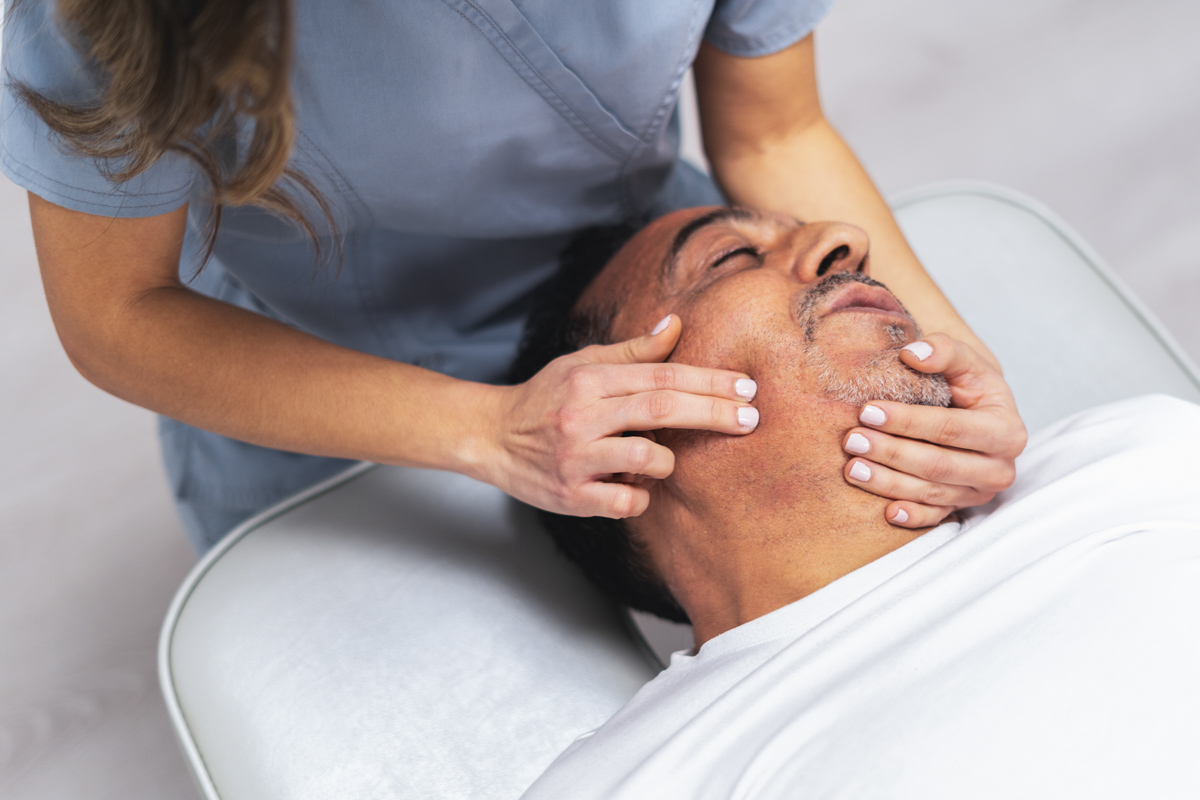
Occasional jaw soreness after a long day isn’t necessarily cause for concern. However, if you’re noticing a pattern, such as recurring headaches, ongoing jaw stiffness, or discomfort that keeps returning despite rest, it may be time for a more thorough look at what’s going on.
Patients throughout Owasso, Tulsa, and nearby communities often wait longer than necessary before seeking care for jaw and headache symptoms, sometimes because they assume the discomfort is unrelated or will resolve on its own. In many cases, an earlier evaluation makes it easier to identify what’s contributing to the issue before symptoms become more persistent or start to affect other areas, like sleep quality or the ability to focus at work.
If your jaw tension is affecting your sleep, your ability to eat comfortably, or your day-to-day focus, that’s a good sign it’s time to have it looked at. Waiting rarely makes these symptoms go away, and in many cases, the muscle tension and compensation patterns become more established the longer they go unaddressed.
It also helps to pay attention to how your symptoms respond to everyday changes. Some patients notice their jaw tension eases up over the weekend, only to return once the work week starts back up and stress or desk posture come back into the picture. Others find that their headaches are worse in the morning, which can point toward nighttime clenching or grinding. These kinds of patterns are useful pieces of information, and sharing them with our team can help guide a more focused evaluation.
A Quick Checklist Before Your Appointment
Before scheduling a visit, it can help to take note of a few details about your symptoms. Consider the following:
- When did your jaw tension or headaches first start?
- Do your symptoms happen more often during stressful periods or at certain times of day?
- Do you notice clenching or grinding, especially at night?
- Does your jaw tension seem connected to neck stiffness or posture?
- Have you tried anything for relief, and did it help even temporarily?
Bringing this information to your first visit helps us get a clearer picture of your symptoms and how they may be connected, so we can focus your evaluation on what matters most instead of starting from scratch. Even rough notes are helpful. You don’t need exact dates or a detailed log, just a general sense of when things started and what seems to make them better or worse.
Take the Next Step Toward Relief From Jaw Tension and Headaches
Living with ongoing jaw pain or headaches can affect far more than your comfort. It can impact your sleep, your focus, and your ability to enjoy everyday activities. At Complete Care Chiropractic & Neuropathy Clinic, we believe patients deserve honest answers about what may be contributing to their symptoms, along with a personalized plan for moving forward. You can learn more about our approach and our team before your first visit.
If jaw tension, clicking, or recurring headaches have been part of your routine for too long, we’re here to help you understand what’s going on and what your options look like. Our team serves patients throughout Owasso and the surrounding area with a thorough, root-cause approach to care.
Ready to find out what may be contributing to your TMJ pain or headaches? Schedule an appointment with Complete Care Chiropractic & Neuropathy Clinic today, and take the next step toward lasting relief.
Ready to Take the Next Step Toward Better Health?
Complete Care Chiropractic & Neuropathy Clinic provides personalized chiropractic, spinal correction, and neuropathy care for patients throughout Owasso, Tulsa, and Claremore. Contact our team to discuss your concerns and schedule an appointment.
Like this article? Spread the word!
Related Posts
Find Lasting TMJ Relief with Owasso’s Expert Chiropractic Team at Complete Care Chiropractic
Discover lasting relief from TMJ disorders with Complete Care Chiropractic in Owasso. Our…

What to Expect at Your First Chiropractic Visit in Owasso, OK: A Guide From Complete Care Chiropractic & Neuropathy
Wondering what to expect at your first chiropractic visit in Owasso, OK? See how our…

How to Tell the Difference Between Muscle Soreness and a Real Back Injury
Not sure if it's muscle soreness or a back injury? Learn the key differences and schedule…